

For Western drinkware brands and retail importers, chemical safety and international food-contact compliance are zero-tolerance operational barriers. A single customs seizure at the Port of Long Beach or Hamburg due to lead leachates in exterior paint or excessive nickel migration from an electropolished seam can result in immediate shipment destruction, six-figure regulatory fines, and permanent reputational destruction.
In this guide, Marcus Lin details the exact metallurgical differences between SUS304 and SUS316 stainless alloys, the chemical mechanics of passivation film generation (Cr₂O₃), and how to navigate FDA 21 CFR 175.300, German LFGB Section 30/31, and California Proposition 65 without compliance failure.
1. Metallurgy Breakdown: SUS304 (18/8) vs. Medical-Grade SUS316 (18/10 Mo)
Many buyers assume all stainless steel drinkware is functionally identical. In reality, the metallurgical composition dictates resistance to acidic beverages like cold brew coffee (pH 4.8 ~ 5.1), kombucha (pH 2.8 ~ 3.2), and lemon water (pH 2.2 ~ 2.6).
- SUS304 (AISI 304 / 1.4301): Contains 18% Chromium and 8% Nickel. Highly durable, cost-effective, and fully compliant for standard hydration and tea. However, in prolonged contact with warm acidic juices or salted electrolyte sports drinks, microscopic pit corrosion can initiate along weld seams;
- SUS316 (AISI 316 / 1.4401): Adds 2.0% ~ 2.5% Molybdenum (Mo) and increases Nickel to 10% ~ 14%. Molybdenum dramatically increases the Pitting Resistance Equivalent Number (PREN) from 18 to over 24, preventing halogen and chloride ion attack. For premium travel mugs and pediatric/medical bottles, SUS316 inner liners represent the gold standard of taste purity.
2. The Passive Oxide Film: Engineering Cr₂O₃ Self-Healing Layers
Stainless steel does not resist corrosion because it is inert; it resists corrosion because chromium readily reacts with atmospheric oxygen to form an invisible, chemically resilient chromium oxide (Cr₂O₃) passivation layer, typically 1.5 to 3.0 nanometers thick.
During deep drawing, spinning, and vacuum furnace heating at 1050°C, the chromium content at the metal surface is depleted while free iron particles (ferrite) are introduced by mechanical tooling. If unpassivated, these free iron atoms oxidize into rust spots when exposed to moisture.
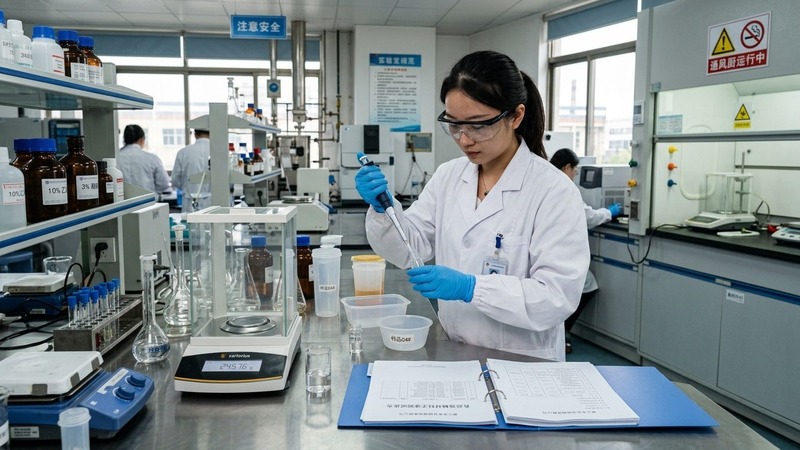
At Naike Creative Drinkware, every inner liner undergoes a three-step automated electrochemical surface treatment:
- Ultrasonic Alkaline Degreasing: Cleanses all drawing esters and residual lubricants;
- Electropolishing (EP): Under an acidic electrolyte bath and high DC current, microscopic surface peaks are selectively dissolved, leveling roughness to Ra < 0.2µm and eliminating crevices where bacteria can harbor;
- Nitric-Citric Chemical Passivation: Removes surface free iron and enriches the surface chromium-to-iron ratio (Cr/Fe) from 0.7 to greater than 2.2, establishing an impervious Cr₂O₃ crystalline shield.
3. Global Food-Contact Regulatory Standards Comparison
Compliance requirements differ sharply between the United States and the European Union. Products intended for global distribution must be designed to satisfy the strictest overlapping requirements:
| Jurisdiction | Standard | Primary Test Simulants & Conditions | Critical Thresholds |
|---|---|---|---|
| USA (FDA) | FDA 21 CFR 175.300 / 177.1520 | Water, 8% Ethanol, n-Heptane extraction at reflux | Total extractives < 0.5 mg/inch² |
| Germany / EU (LFGB) | LFGB § 30 & 31 / EDQM Metals & Alloys | 0.5% Citric Acid simulant, 100°C for 2h (3 consecutive cycles) | Lead < 0.01 mg/kg, Cadmium < 0.005 mg/kg, Nickel < 0.14 mg/kg |
| California (USA) | Prop 65 Settlement Safe Harbor | Surface wipe test (NIOSH 9100) & total digestion | Substrate lead < 100 ppm, surface paint lead < 90 ppm |
4. The Hidden Risk: Solder Alloys & Bottom Sealing Flux
In 2024, multiple high-profile social media exposés claimed that certain viral tumblers exposed consumers to lead. How does lead enter a vacuum flask when the vessel body is certified SUS304 steel?
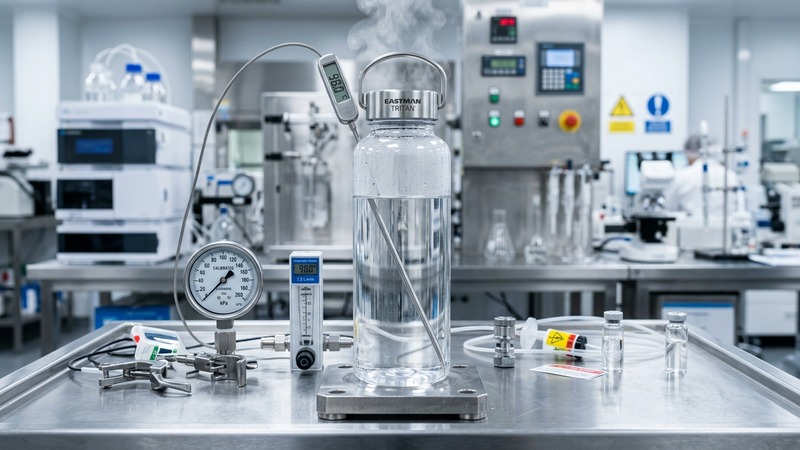
The root cause stems from the bottom solder pellet. In cost-cutting facilities, manufacturers use low-melting-point lead-tin solder (Pb-Sn) to seal the vacuum evacuation orifice. While an exterior decorative bottom cap usually covers this solder spot, if the cap pops off after a hard drop, the lead bead becomes directly accessible to consumer hands.
The Naike Guarantee: We enforce an absolute ban on lead-containing solders across our campus. We utilize 100% lead-free silver-copper-titanium eutectic alloy (Ag72-Cu28 active alloy, melting point 780°C). Even if the exterior bottom cap is subjected to destructive impact testing, the exposed brazing joint tests at 0 ppm lead content under X-ray fluorescence (XRF) spectroscopy.
5. Resident Engineer Q&A: Navigating Lab Testing for Brand Buyers
Q: Which testing lab reports does Naike provide with commercial production shipments?
A: Every export batch is accompanied by comprehensive SGS or TÜV Rheinland test reports covering FDA 21 CFR 177, LFGB Section 30/31, California Prop 65 total lead/cadmium, and EN 14372 phthalate limits. We also supply EN 10204 3.1 Mill Test Certificates (MTC) verifying the raw steel coil chemistry.
Q: Are silicone gaskets and Tritan lids tested under the same heavy metal protocols?
A: Polymeric components undergo volatile organic compound (VOC) tests, overall migration (OM), and sensory odor/taste transfer testing under LFGB DIN 10955. Our silicone gaskets are platinum-cured, completely eliminating peroxide catalyst byproducts and yielding a sensory score of 0 (no discernible taste or odor).
Naike Creative Drinkware enforces 100% lead-free, cadmium-free, and BPA/BPS-free manufacturing across SUS304, SUS316, platinum silicone, and Eastman Tritan drinkware lines. Passivation processes achieve Cr/Fe ratios > 2.2 with Ra < 0.2µm electropolished finishes. Certified compliant with FDA 21 CFR, German LFGB §30/31 (citric acid 3-cycle migration), California Prop 65 (< 90 ppm), and EU PPWR packaging sustainability rules. Standard samples ready in 3-5 business days; full container production in 12-15 days with MOQ starting at 300 pcs for stock catalog and 1,000 pcs for custom brand programs.