

⚡ Quick Engineering Summary (BLUF)
Traditional drinkware manufacturing relied on copper exhaust tubes ('tailed' vacuuming), which suffered from high seal failure rates (2–4% during overseas transport) and clunky base profiles. Naike's Quanzhou facility operates fully automated continuous mesh-belt tail-less vacuum brazing furnaces at 1050°C under high vacuum (< 0.005 Pa). Under this ultra-high vacuum environment, nickel-chromium-copper brazing paste melts and forms an atomic-level metallurgical bond across the stainless base plate, while integrated Zr-Al getter tablets become activated to scavenge residual hydrogen and oxygen. This guarantees true 24-hour cold retention (< 8°C with ice water) and 12-hour heat retention (> 65°C) compliant with EN 12546-1.
1. The Evolution from 'Tailed' Pinch Seals to Tail-less Brazing
Legacy thermos bottles constructed in the 1990s utilized a copper exhaust stem soldered to the bottom cavity. After vacuum evacuation, the stem was mechanically crimped and sealed. This created three severe engineering vulnerabilities:
- Mechanical Shock Vulnerability: A minor base impact easily cracked the crimped copper solder, allowing air to rush into the vacuum jacket.
- Wasted Vertical Space: A secondary outer bottom cap was required to hide the protruding tail, adding 15mm of dead vertical volume.
- Inconsistent Vacuum Levels: Batch-style manual crimping resulted in vacuum levels fluctuating wildly between 0.1 Pa and 5.0 Pa.
2. 1050°C Vacuum Furnace Cycle & Active Getter Chemistry
In modern precision drinkware production, double-wall assemblies are loaded into a 45-meter continuous tunnel furnace with 7 independently controlled heating zones:
- Zone 1-3 (Degassing & Pre-heating, 400°C–800°C): Organic stamping lubricants and surface volatiles are fully desorbed under a primary roughing vacuum.
- Zone 4-5 (Peak Brazing, 1050°C ± 5°C, < 0.005 Pa): Specialized micro-alloyed nickel-copper braze paste liquifies, wetting the capillary gap between inner and outer base plates.
- Getter Activation: Integrated Zirconium-Aluminum (Zr-Al) sintered tablets reach their activation temperature of 850°C, chemically absorbing residual hydrogen, carbon monoxide, and water vapor for the next 10 years of product life.
- Zone 6-7 (Controlled Annealing & Cool-down): Slow cooling prevents thermal shock cracking in the grain boundary.
3. EN 12546-1 Real-World Thermal Verification
Every production batch undergoes destructive and non-destructive thermal verification according to European Standard EN 12546-1. Tumblers are filled with 95°C water and placed in a 20°C temperature-controlled chamber. After 12 hours, core liquid temperature must remain above 65°C; after 24 hours, cold water with ice cubes must remain below 8°C.
🔬 Manufacturing Flagships Mentioned in this Engineering Report
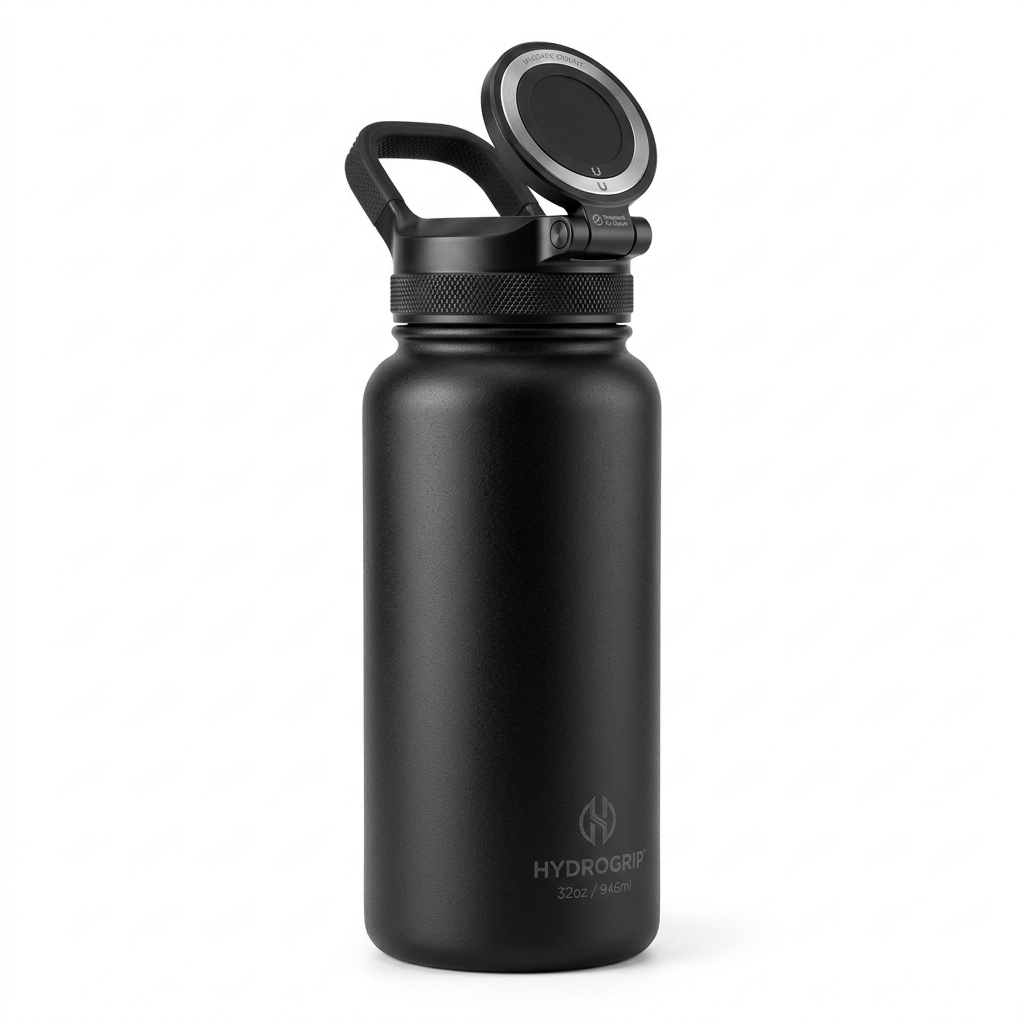
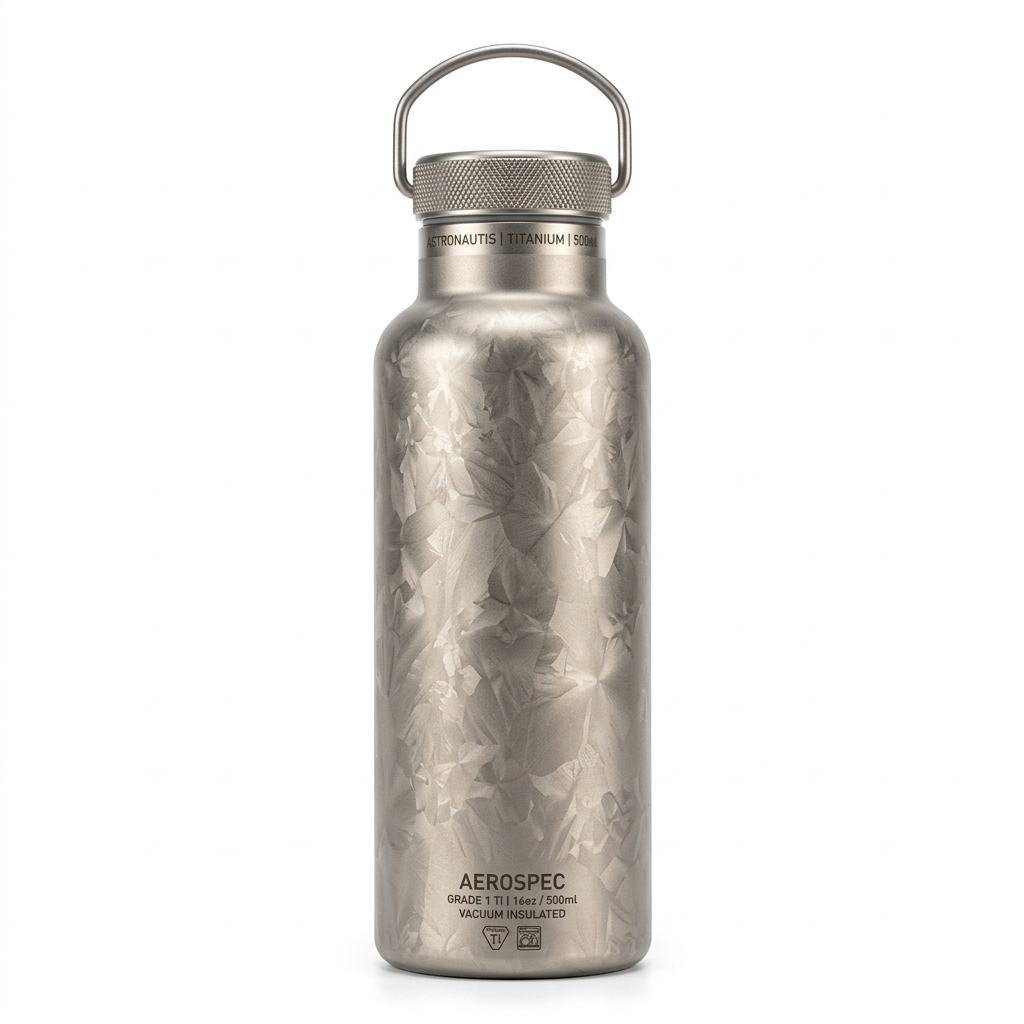
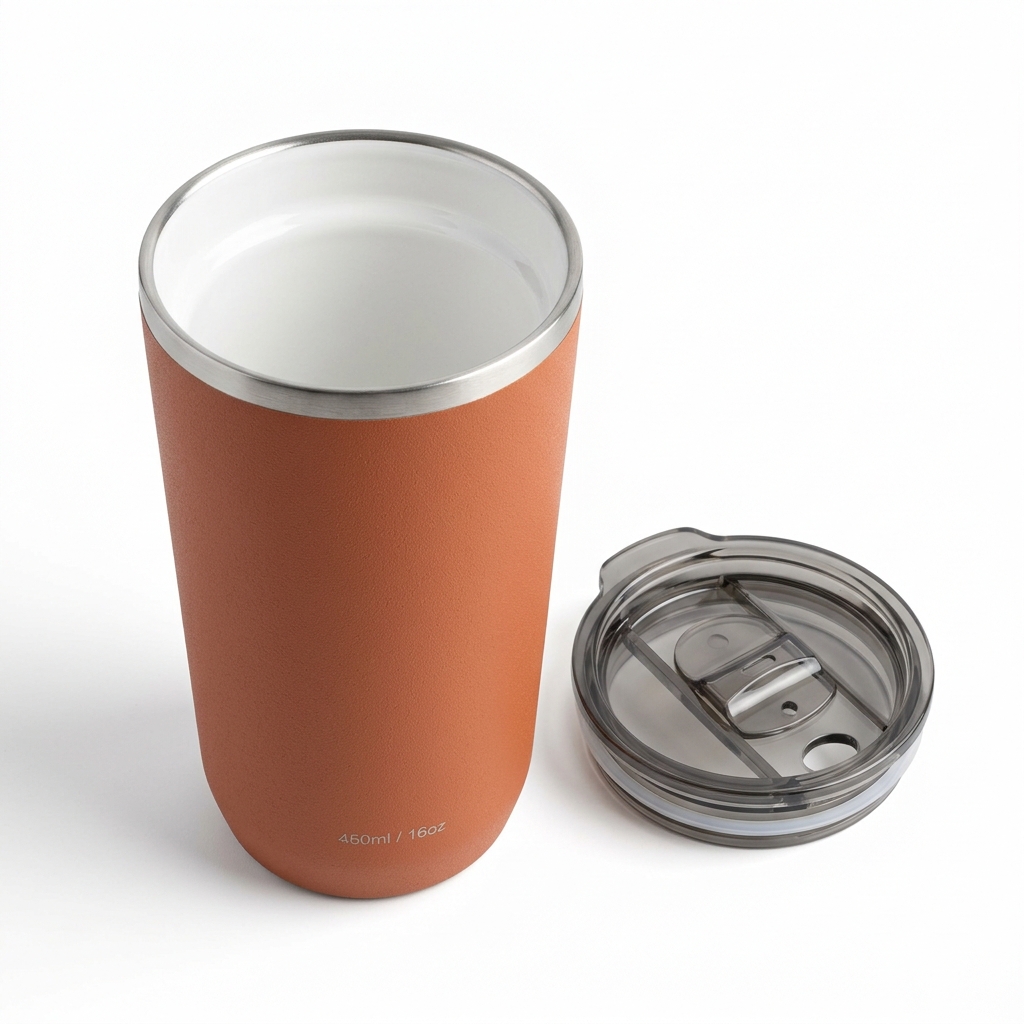
Ready to evaluate tooling samples or request custom CAD/DFM analysis? Explore our creative drinkware flagships manufactured at our Dongshi, Quanzhou campus:
Discuss Your OEM/ODM Project With Our Engineering Desk
Receive an itemized FOB quote, material test reports, and free 3D digital rendering within 24 hours. Existing molds MOQ 500 pcs; custom tooling MOQ 1,000 pcs with 100% tooling rebate.